
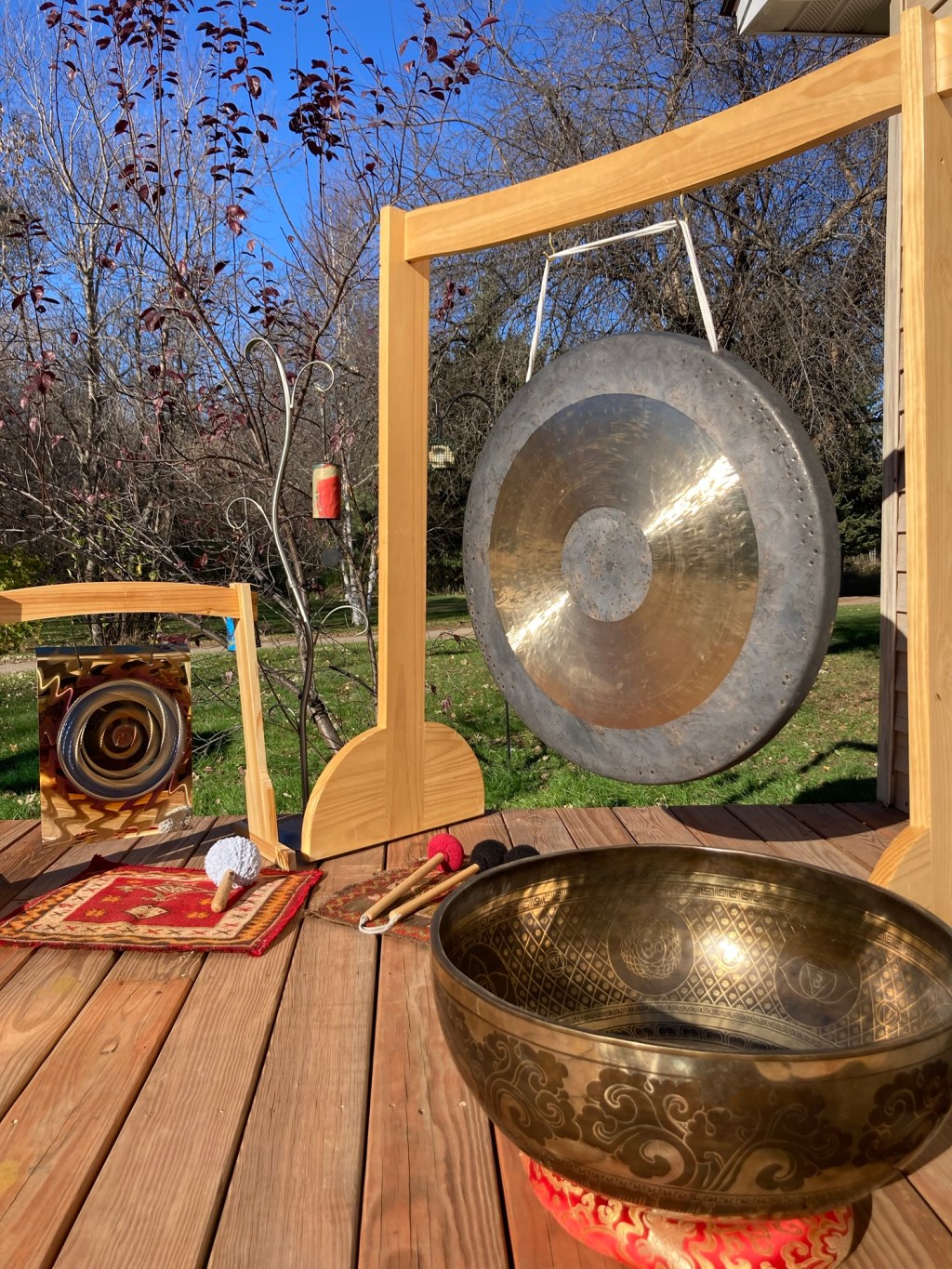
If you’ve ever attended a sound bath and felt completely transported by the swell of a gong, you already know: gongs are not just instruments — they are portals to another dimension of sound and awareness, a tangible window into the universe itself. Each strike sends waves of vibration through your body, mind, and subtle energy, creating a rich, immersive experience unlike anything else. Gongs can lift your mood, quiet your thoughts, expand your awareness, and bring you fully into the present moment. They are bold, dynamic, and capable of guiding you into states that are at once deeply relaxing and profoundly expansive.
But what actually makes them so powerful?
The Science Behind the Sound
Gongs produce an unusually broad spectrum of frequencies — from deep, resonant lows to shimmering, high overtones — all unfolding at once. Unlike melodic instruments that follow predictable scales or rhythms, gongs create complex, evolving layers of sound that continuously shift and interact.
This complexity has a direct impact on the brain.
As the gong washes over you, the brain begins to shift out of fast beta waves (associated with active thinking, stress, and analysis) and into slower alpha and theta states. These slower brainwaves are linked to meditation, creativity, emotional processing, and restorative rest. Because the gong’s tones are non-linear and unpredictable, the mind cannot easily anticipate what comes next — and that inability to “pattern match” interrupts habitual thought cycles.
Instead of thinking about the sound, you begin to experience it.
At the same time, low-frequency vibrations physically move through the body. Sound is vibration, and vibration travels through tissue, fluid, and fascia. This subtle internal resonance stimulates the nervous system in a way that encourages parasympathetic activation — the “rest and digest” state. Heart rate slows. Breathing deepens. Muscles soften. Stress hormones decrease.
You are not just hearing the gong. You are being bathed in it.
Why the Body Responds So Strongly
One of the most unique aspects of the gong is its full-body vibrational field. Unlike smaller instruments that localize sound, a gong fills the space and moves through you.
As those waves pass through the body, they often draw awareness to areas of tension or energetic resistance. You might notice pressure in the chest, warmth in the belly, tingling in the hands, or subtle sensations in the forehead. This heightened internal awareness is a natural response when the nervous system shifts into slower, more receptive states.
Sometimes, this heightened awareness brings emotional release and awareness.
Stored stress and unprocessed emotion are often held in the body as muscular tension or subtle energetic contraction. The evolving vibration of the gong gently presses against these areas. If something feels intense or unfamiliar, it is often simply energy moving — not something going wrong. If we set an intention to allow the energy to move, we can create a space for the blockage to clear and a new equilibrium to be established. This is the practice.
This is why gongs can feel powerful, and occasionally confronting. They don’t just relax you. They reveal you.
Why Gongs Are Sometimes Misunderstood
Because gongs are complex and immersive, first-time listeners can feel unsure about them. Some tones may sound cinematic, dramatic or suspenseful. Others may feel chaotic compared to crystal bowls or melodic instruments.
But that unpredictability is part of their effectiveness.
The mind relaxes most deeply when it stops trying to control or predict. Gongs resist control. They demand presence. When you allow yourself to stop interpreting and simply receive, the experience becomes expansive rather than overwhelming. Breathe into the experience and if you are ready, let go.
Intensity does not equal harm. A skilled practitioner manages dynamics, pacing, and space intentionally. What may feel intense at moments is often just your system recalibrating.
And you never have to understand the gong to benefit from it. The body responds whether the intellect approves or not.
Leave Your Expectations at the Door
One of the most powerful things you can do before a gong sound bath is surprisingly simple: release the idea of what it should feel like.
Some people expect instant bliss. Others expect visions, emotional breakthroughs, or dramatic transformation. And sometimes, those things happen. But often, the experience is quieter, subtler, and more personal. Try to remain open to the experience.
Gongs do not perform on demand.
Because their sound is complex and constantly evolving, every session feels different. Your nervous system may soften immediately one day and feel more alert the next. You may drift into spacious stillness, or you may simply notice your breath more clearly than usual. All of it counts.
Expectation creates tension. It keeps the analytical mind active, scanning for results.
When you release expectation, you give the body permission to respond naturally.
Instead of asking, “Is this working?”
You begin asking, “What is happening right now?”
That subtle shift — from evaluation to observation — is often where the real depth begins. Be present and listen.
How to Listen for a Deeper Experience
Listening to a gong is less like listening to music and more like entering a grand landscape.
Rather than following a melody, allow yourself to float among the waves of sound. Like drifting on a tour through the solar system. Let the tones come to you. Notice both the distant shimmer and the deep undertones. Pay attention to the silence between swells — that’s often where integration happens.
If strong sensations arise, stay curious. Breathe. Observe without labeling the experience as good or bad. The more you allow, the deeper you go. Allow.
Setting a simple, present-focused intention can help:
“I receive.”
“I soften.”
“I allow.”
Then let the sound carry you. Out into the universe.
Why Gongs Are So Effective in Sound Baths
Gongs engage multiple systems at once:
- They shift brainwave patterns toward meditative states.
- They stimulate the parasympathetic nervous system.
- They create whole-body vibration.
- They interrupt mental rumination.
- They heighten emotional and energetic awareness.
- They open access to expansive states of consciousness.
Few instruments operate on so many levels simultaneously.
A gong doesn’t simply produce sound — it creates internal space. Space in the nervous system. Space in the mind. Space in the places within us that rarely get quiet enough to be felt.
And that space changes you.
You may leave your next gong bath feeling lighter. Clearer. More grounded. Or unexpectedly inspired. You may feel deeply rested, as if you’ve slept for hours. You may feel emotionally open, creatively charged, or peacefully neutral in a way that feels rare in modern life.
Every session is different — because every nervous system is different. Because every moment is different. Because you are different each time you lie down.
That’s part of the magic.
The next time you enter a gong sound bath, you’re not just attending an event. You’re stepping into a vibrational landscape designed to recalibrate your body, quiet your mind, and open your awareness. You’re giving yourself permission to unplug from constant stimulation and reconnect with something deeper.
And once you experience what a gong can do — how it settles your system, expands your perception, and creates profound internal space — you may find yourself looking forward to the next immersion long before the final tone fades.
The gong doesn’t just relax you.
It reminds you what spaciousness feels like. What your internal CALM feels like.
And that’s something worth returning to.
Gong track CD JennieRuth Healing Waves of Sound on Youtube CLARITY
Full Album recording SPOTIFY and APPLE MUSIC
Frequently Asked Questions About Gong portions of Sound Baths
What is a gong sound bath?
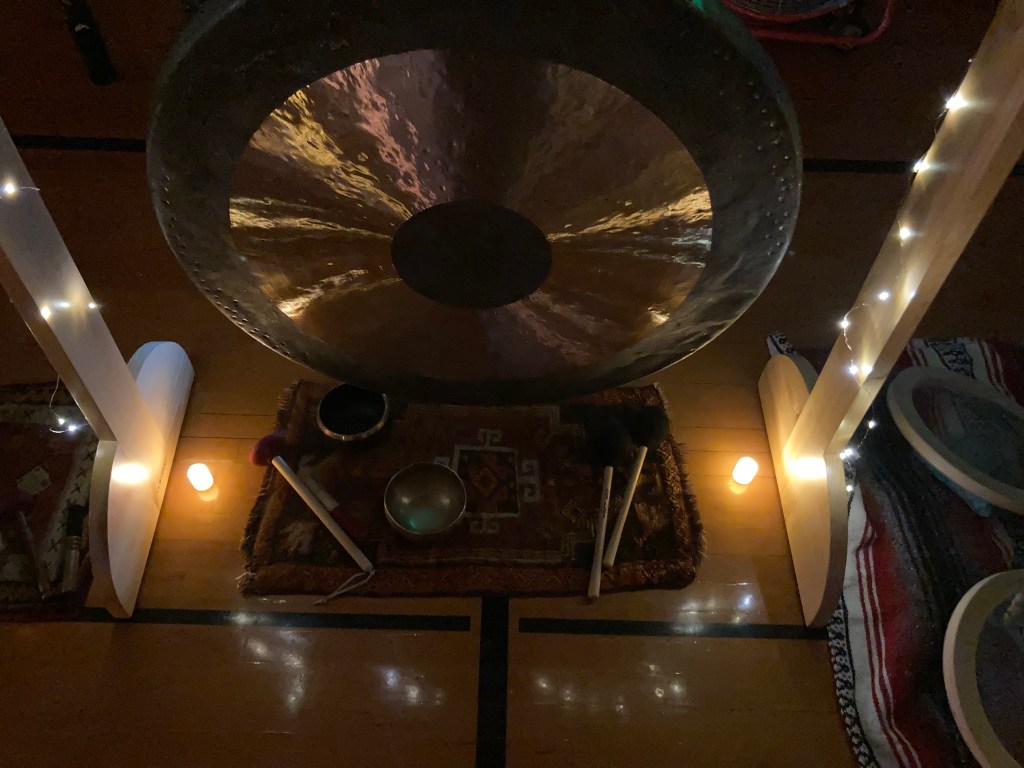
A gong sound bath is a meditative experience where participants lie down comfortably while a practitioner plays one or more gongs. The sound waves wash over the body, encouraging relaxation, nervous system regulation, and expanded awareness.
How do gongs affect brainwaves?
The complex and evolving frequencies of a gong can encourage the brain to shift from active beta states into slower alpha and theta states associated with meditation, creativity, and emotional processing.
Why do I sometimes feel emotional during a gong bath?
Sound vibrations can heighten body awareness and stimulate the release of stored tension. Emotional responses are often a natural part of relaxation and integration.
Are gong sound baths safe?
For most people, yes. A trained practitioner manages volume, pacing, and duration carefully. Individuals with sound sensitivity, epilepsy, or certain medical conditions should consult a healthcare provider beforehand.
How long does a gong portion of my sound bath last?
I create a dedicated gong movement of the Sound Bath to 15 minutes in the center of the 45 to 60 minutes session. If a Gong Song healing session, we can be creative. BOOK
The gong has been included in sound healing sessions because of the qualities that this ancient instrument brings to your experience in the session.
I hope to see you.
Love, JennieRuth
 Sound Healing